At the Urgences 2026 Congress organised by the French Society of Emergency Medicine (SFMU), e-sensia presented its latest advances in artificial intelligence applied to medical regulation and the analysis of emergency calls.
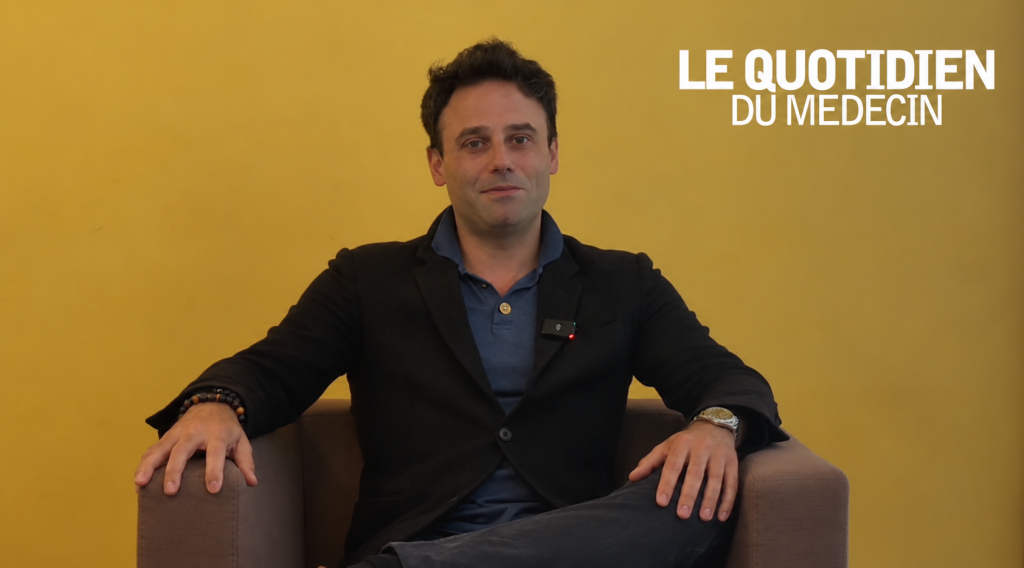
During this talk, Dr Jean-Baptiste Perney, emergency dispatch physician and co-founder of e-sensia, returned to a firm conviction: artificial intelligence does not replace caregivers; it allows them to devote more time to their medical expertise.
Automating administrative tasks to give time back to dispatchers
One of the innovations presented relies on an intelligent pre-answering system already deployed at SOS Médecins Grand Paris.
When a caller is on hold, an artificial intelligence temporarily handles the call in order to gather the essential administrative information. As soon as a medical dispatch assistant becomes available, the call is instantly transferred to them.
This setup significantly reduces waiting times while cutting the time spent on administrative tasks. Teams can then focus on what makes their real value: listening, clinical reasoning and decision-making.
Intelligence means knowing how to ask the right questions
At e-sensia, the AI is not designed to make a diagnosis.
It supports professionals by structuring information and asking the right questions.
A second AI acts as an additional safety net, helping dispatch teams to identify more quickly the situations that call for particular vigilance, without ever substituting itself for their expertise.
Turning millions of calls into medical knowledge
Dispatch calls represent an exceptional source of information for improving medical practices.
Thanks to the technologies developed by e-sensia, conversations can be transcribed, pseudonymised, structured and analysed in order to build a genuine repository of health voice data.
This structuring makes it possible to easily search for specific clinical situations, study patient pathways, replay cases, improve team training or develop new research protocols.
Semantic analysis also makes it possible to recognise that a patient describing “chest pain”, “chest tightness” or “precordialgia” is in fact describing the same medical complaint, paving the way for a far more refined understanding of these exchanges.
An AI designed with doctors, for doctors
All of the solutions developed by e-sensia are built on a logic of co-construction with healthcare professionals.
This ongoing collaboration makes it possible to develop tools that are genuinely suited to the needs of the field and able to support teams in their daily practice.
Among the work presented was the development of models for the early identification of certain neurological emergencies, in order to speed up patient orientation where needed.
Building the tools caregivers will use tomorrow
At e-sensia, we are convinced that artificial intelligence must be developed as close as possible to the real-world uses of professionals.
Our ambition is simple: to make the most of health data, improve the organisation of care and build, together with doctors, the tools that will meet the challenges of tomorrow’s medical regulation.
Watch Dr Jean-Baptiste Perney’s full talk at the Urgences 2026 Congress on our YouTube channel.