Artificial intelligence applied to healthcare raises legitimate questions.
At e-sensia, some of these come up regularly.
They relate to data privacy, the role of technology, and the place of the physician.
Here are three answers to better understand our approach.
How does AI integrate into team workflows?
Integration is gradual and designed for real-world conditions.
The technology fits into existing tools without changing regulatory practices.
It operates in the background, providing additional information during the call.
Initially, it can be deployed in observation mode, analyzing situations without impacting decision-making.
Then, it progressively supports teams in their daily work.
The goal is not to transform how teams work, but to strengthen it.
“The challenge is to integrate technology without disrupting teams. It must adapt to existing practices, not the other way around,” explains Cédric Thoma, co-founder and COO of e-sensia.
What happens to the data?
Data is processed within a strict framework, in compliance with current regulations, particularly GDPR.
It is neither sold nor used for commercial purposes.
Confidentiality and data security are at the core of the system.
👉 Learn more about e-sensia’s approach and commitments.
Does AI replace the physician?
No.
The voice intelligence developed by e-sensia is designed to support healthcare professionals, not replace them.
It helps analyze certain signals and draw attention to relevant elements.
But decision-making always remains human.
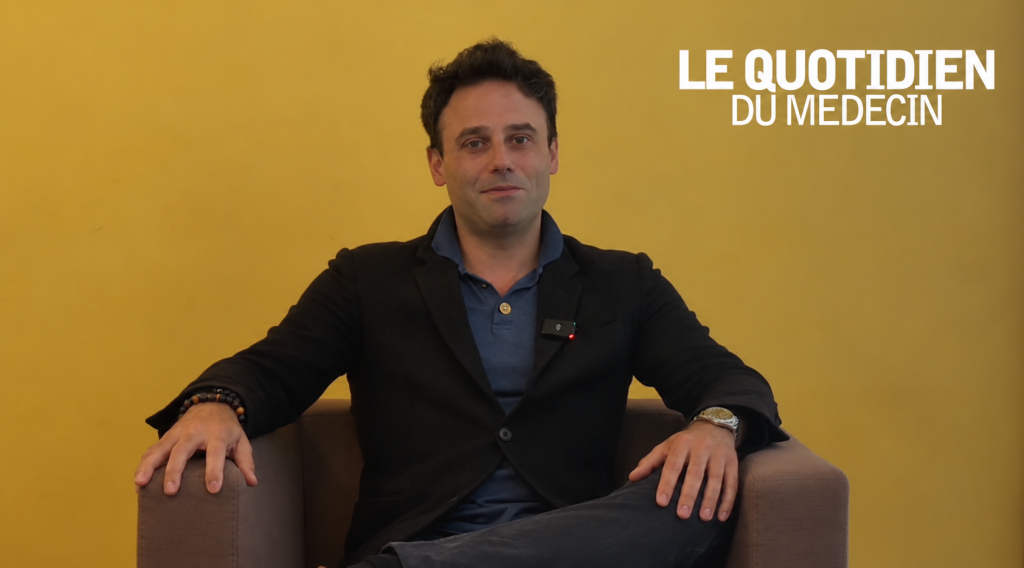
“Technology does not make decisions. It supports them. The physician’s role remains central from start to finish,” explains Dr. Jean-Baptiste Perney, médecin urgentiste et co-fondateur d’e-sensia.
A technology designed to support
AI in healthcare must meet a simple requirement: be useful, without adding complexity.
At e-sensia, our approach is based on a clear principle: enhancing caregivers’ capabilities without changing their role.
Providing discreet support.
Reliable.
In real time.